What challenges does a loyalty program address (in the age of AI)?
02
July


Camille Macaudière
Category: Customer Loyalty
💡 Why Loyalty Programs Remain Strategic in the Age of AI
At a time when artificial intelligence promises highly personalized experiences, some might think that loyalty programs belong to a bygone era. Yet they have never been more prevalent in the Retail. According to an internal study conducted by Splio, 63% of our Retail client brands have Retail . That’s because behind loyalty cards and their associated mechanisms lies a powerful tool for gaining customer insights, driving engagement, and setting a brand apart.
On the other hand, loyalty programs enjoy nearly unanimous support among French consumers, with 87% of them reporting that they are enrolled in at least one program, according to a study conducted by Retail Le Média. That should be enough to motivate many brands that are still hesitant to take the plunge!
The question today is no longer whether to have a loyalty program, but what it’s actually used for.
Although often underestimated, customer insight is nevertheless one of the primary objectives of a loyalty program. While reward mechanisms are the most visible aspect for consumers, their true value often lies elsewhere: in the ability they give brands to better understand the people who buy from them.
Turning Anonymous Transactions into Actionable Customer Data
In fact, a loyalty program makes it possible to turn anonymous transactions into actionable data. While a simple receipt reveals very little, identifying the customer makes it possible to piece together a story: who is buying, how often, which products are preferred, how behavior changes over time, and which customer profiles show the greatest potential.
In brick-and-mortar retail, the loyalty card thus becomes a true identification tool. It allows a customer to be linked to a sales receipt and, more broadly, helps bridge the long-standing disconnect between in-store and digital channels. A visit to a store, a purchase on an e-commerce site, opening an email, or using a mobile app can then be combined to build a more comprehensive view of the customer journey.
Collecting First-Party Data in the Face of the End of Third-Party Cookies
The loyalty program is also a key tool for collecting first-party data. In exchange for a clear value proposition (rewards, personalized coupons, early access to certain offers, entry into contests, or exclusive content), consumers agree to share certain information about themselves. Data is no longer collected covertly; rather, it is part of an explicit exchange between the brand and its customer.
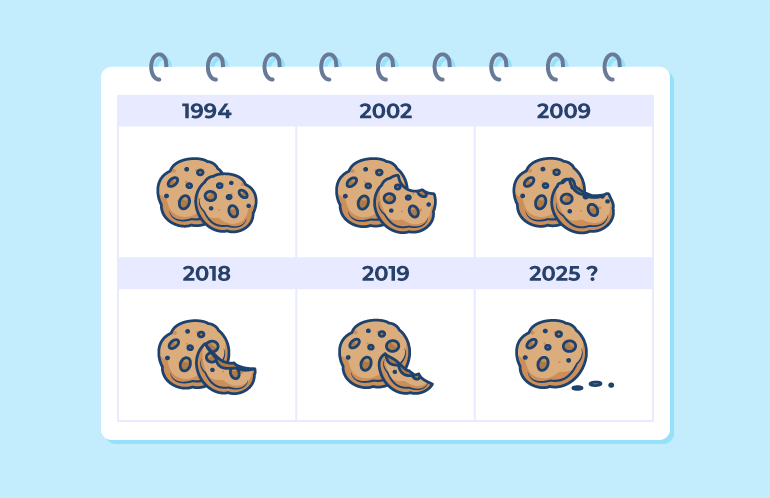
This issue is becoming increasingly important in a context marked by stricter regulations on personal data and the gradual phase-out of third-party cookies. For many retailers, loyalty programs have thus become one of the primary ways to build reliable, consent-based, and sustainable customer insights. This resource is all the more strategic because it now serves as the driving force behind CRM personalization… and, in the future, the artificial intelligence systems that power them.
Beyond simply collecting data, a loyalty program plays a vital role in building the relationship between a brand and its customers. It is no longer just about rewarding purchases, but about creating a path of ongoing interactions that strengthen brand loyalty.
Turning Loyal Customers into Brand Ambassadors
One of the first strategies is to turn the most engaged customers into true brand ambassadors. By highlighting reviews, recommendations, and user-generated content (UGC), brands no longer simply talk to their customers—they give them a voice. Similarly, referral programs help structure this ambassador dynamic by rewarding recommendations and turning satisfied customers into active advocates.
Influencing purchasing behavior across all channels
But engagement isn’t limited to the community aspect. It also depends on the loyalty program’s ability to influence purchasing behavior over the long term. As a result, these programs help drive repeat purchases, increase purchase frequency, and boost customer lifetime value. This is achieved through rewards tied not only to transactions but also to overall engagement, such as membership tiers, exclusive benefits, cashback, and experiences reserved for the most loyal members.
With this in mind, the program also becomes a tool for managing promotional activities. Rather than offering a wide range of general discounts, retailers can reserve certain benefits for program members, thereby optimizing their promotional rate while enhancing the perception of value among customers.
Emphasizing Omnichannel and Local Presence
Customer engagement also involves leveraging omnichannel strategies. By encouraging customers to interact and make purchases across multiple touchpoints (stores, e-commerce mobile apps), brands enrich the relationship and increase the overall customer value over time. The loyalty program then becomes a true connecting thread between channels. In this context, solutions such as Splio Loyalty integrate with the leading point-of-sale software on the market (Cegid, Orisha, and LundiMatin) and e-commerce platforms e-commerce Shopify, PrestaShop, and Magento) to unify customer data and enable a seamless, omnichannel, and consistent loyalty experience at every stage of the customer journey.
Finally, the most advanced programs incorporate a dimension of continuous engagement through mobile devices. Digitizing the program via a mobile wallet helps embed the brand in customers’ daily lives by making it easier to access benefits and enabling personalized—and sometimes even geolocation-based—interactions.
Reduce Churn by Re-engaging Inactive Customers
At the other end of the customer lifecycle, these tools also play a key role in reducing churn. By identifying signs of inactivity, brands can trigger targeted reactivation efforts: specific campaigns, personalized offers, or dedicated gestures aimed at re-engaging customers before they ultimately disengage.
As a result, customer engagement no longer relies on a single mechanism, but on a coherent set of levers that transform a program into a true customer loyalty strategy.
In an environment where products, prices, and even services are becoming increasingly standardized, brands have few truly sustainable ways to differentiate themselves. It is precisely in this context that loyalty programs take on strategic importance.
Beyond its transactional function, it has become a true differentiator by enabling brands to offer a relational experience that competitors cannot easily replicate. The most forward-thinking brands no longer simply reward purchases; they build programs that foster a sense of belonging and create a feeling of exclusivity.
This can take the form of member-only benefits, such as early access to certain collections during sales, exclusive products, or special experiences that strengthen the emotional connection with the brand. The goal is not merely to build loyalty through rewards, but to build loyalty by recognizing and valuing the customer.
For many retailers—particularly those operating in highly competitive sectors where product offerings offer little differentiation—loyalty programs have become a key tool for positioning themselves in the market. They are no longer just one marketing tool among many, but a genuine strategic initiative capable of influencing brand preference over the long term.
Artificial intelligence is gradually emerging as a key driver of CRM strategies. Predictive AI to identify customers with the highest purchase potential based on the proposed communication; AI agents to provide recommendations and trigger the right CRM actions; and generative AI to produce more personalized content: use cases are multiplying at every stage of the customer lifecycle.
However, regardless of the form it takes, AI shares a common limitation: it is only useful if it is based on high-quality data. Artificial intelligence does not create knowledge out of thin air. It learns, predicts, and makes recommendations based on the information it is given.
However, as we have seen previously, loyalty programs are one of the main ways for brands to build reliable, rich, and consent-based customer insights. It is this first-party data, collected over the course of the relationship, that enables models to identify trends, detect weak signals, and personalize interactions in a meaningful way.
The loyalty program thus becomes much more than just a marketing tool: it serves as a true information foundation for loyalty program members, upon which AI systems can build value. Without this raw data, recommendations lose their relevance, predictions lose their reliability, and personalization loses its credibility.
In other words, while AI is often touted as the driving force behind tomorrow’s CRM strategies, loyalty programs remain one of the most strategic sources of data.
One of the promises most often associated with artificial intelligence is its ability to personalize customer experiences on a large scale. Thanks to data analysis and predictive models, brands can now identify individual preferences, anticipate certain behaviors, determine the best time to interact with a customer, and identify the most appropriate reward for each person.
As part of a CRM strategy, AI can recommend the most relevant product, suggest the most suitable offer, identify customers at risk of churn, and predict the actions most likely to drive engagement.
While AI can significantly improve the personalization of customer relationships and thus contribute to long-term customer loyalty, it is not enough on its own to build loyalty.
Loyalty arises when customers perceive concrete value in their relationship with a brand. It is built over time through benefits, thoughtful gestures, or experiences that translate this understanding of the customer into tangible recognition.
That is precisely the role of the loyalty program. While AI helps identify the best course of action, the program provides the mechanisms to make it happen: a personalized reward, an exclusive benefit, a specific status, a special invitation, or an offer tailored to the customer’s situation.
In other words, AI helps brands make better decisions, while the loyalty program brings those decisions to life. One optimizes the relevance of the relationship, while the other strengthens customer loyalty to the brand over the long term.
Rather than competing tools, artificial intelligence and loyalty programs thus emerge as two complementary drivers. AI personalizes interactions. The loyalty program transforms this personalization into lasting engagement.
The rise of artificial intelligence is opening up new possibilities for customer loyalty strategies. From campaign automation and personalized recommendations and rewards to chatbots and customer journey optimization, there are numerous opportunities to make interactions more relevant and effective.
That said, loyalty remains, above all, a matter of human connection. Customers don’t just expect personalized messages or relevant offers; they also want to feel recognized, understood, and valued by the brands they interact with.
That is why the goal should not be to replace humans with AI, but to use artificial intelligence to strengthen relationships with customers. By automating certain low-value-added tasks or helping teams better understand their customers’ expectations, artificial intelligence can enable brands to focus more on what really matters: the quality of the relationship.
This logic also applies to loyalty programs. Behind every reward, every benefit, or every experience offered to members, customers must sense an intention. They must sense an intention. They must feel that a human designed the program to recognize their loyalty—not that an algorithm is automatically distributing benefits according to invisible rules.
Tomorrow’s most successful programs will likely be those that combine the best of both worlds: the analytical and predictive power of AI to understand and anticipate customer needs, and human intelligence to design loyalty experiences that are meaningful, emotional, and personal.
Because while AI can optimize customer relations, customer loyalty will continue to be built first and foremost on trust and respect.
In the age of artificial intelligence, the challenges that a loyalty program addresses have ultimately not changed: getting to know customers better, strengthening their engagement, and setting oneself apart in the long term. What is changing are the means used to achieve these goals. AI will enable CRM teams to automate more, personalize more precisely, and make better decisions. But loyalty will remain, above all, a matter of relationships. Because behind the data, algorithms, and rewards, it is still up to brands to show their customers that they are recognized, understood, and valued.
Table of Contents
Read also