CRM in the Beauty Industry: 5 Use Cases for Personalizing the Customer Experience
12
October 12

Camille Macaudière
Category: CRM Strategy
With the proliferation of purchasing channels, changing consumer expectations, and intensifying competition, the role of CRM teams in the cosmetics industry has undergone a profound transformation.
In the past, the focus was mainly on sending promotional campaigns and managing a loyalty program. Today, CRM managers must address much broader challenges: personalizing the customer experience, increasing purchase frequency, boosting customer value, promoting cross-selling, encouraging customers to upgrade to higher-end products, and building a more direct relationship with consumers.
To achieve this, cosmetics brands are now relying on a broad ecosystem of technologies that combines a Customer Data Platform (CDP), marketing automation, a loyalty engine, mobile wallets, predictive artificial intelligence, and new conversational channels.
In this article, we take a look at the major trends in the French cosmetics market before exploring specific CRM use cases designed to meet the evolving expectations of customers in the cosmetics industry and support brand growth.
France remains the global leader in the cosmetics industry, with a 15% market share, according to the FEBEA (Federation of Beauty Companies). The sector generates 35.6 billion euros in revenue, of which more than 22.4 billion euros comes from exports (primarily to the European Union, the United States, and China). Cosmetics are the second-largest contributor to France’s trade balance, behind the aerospace industry.
The cosmetics market can be divided into seven types of cosmetic products:
Unlike some sectors of the retail, the beauty industry remains deeply omnichannel. According to the NielsenIQ study, conducted in partnership with L’Oréal, on online beauty in Europe, published on E-commerce Nation, 63% of French consumers now buy cosmetics online, with an average of 4.1 purchases per year and an average order value of €27.
But that doesn't mean brick-and-mortar stores are going away. According to NielsenIQ France, consumers are balancing online shopping with the in-store experience. This trend is largely driven by the rise of social media and the launch of TikTok Shop in France in April 2025. Product advice, product testing, skin assessments, and sensory experiences remain key factors in the cosmetics purchasing journey.
FEBEA also notes that the sale of cosmetics in the " Retail " is divided among three distribution channels: large and medium-sized retail stores (such as Leclerc and Monoprix), selective retailers (such as Sephora and Marionnaud), and pharmacies and drugstores.
For brands, this means that we should no longer draw a distinction between e-commerce and retail : customers are constantly switching between the two.
Consumer habits in the cosmetics industry have changed dramatically in recent years. Consumers are no longer looking simply for a product, but for a solution to a specific need that fits into an overall skincare and wellness routine.
This trend is accompanied by growing expectations for personalization. Customers want to receive recommendations tailored to their profiles, preferences, and current concerns. They also expect brands to understand their journeys and offer them more contextualized experiences.
At the same time, cosmetics are increasingly associated with well-being. Skincare rituals are no longer solely about aesthetics but are part of a broader approach to self-care and personal fulfillment, as revealed by The Beauty Analyst. In fact, 38% of Gen Z buys cosmetics primarily to treat themselves, compared to just 20% of the French population as a whole.
Finally, customers remain strongly drawn to innovation. Whether it’s new formulations, new active ingredients, new routines, or personalized approaches, brands must continually demonstrate their ability to deliver value and meet ever-changing needs.
For cosmetics brands, these new expectations underscore the importance of customer data. Understanding consumer habits, personalizing interactions, and offering relevant recommendations have become essential strategies for building engagement, loyalty, and customer value.
In the cosmetics industry, certain purchases are naturally recurring. A moisturizer, serum, or shampoo will eventually run out and need to be replaced. Yet many brands still wait for their customers to return on their own when they need to repurchase a product.
What if CRM could help identify this need even before it's expressed?
Not all customers use their products in the same way.
Some people apply their cream morning and night and finish a jar in just a few weeks. Others alternate between several products or use them more occasionally. As a result, the same purchase date can correspond to very different repurchase dates.
For a cosmetics brand, this reality makes restocking campaigns particularly complex. Sending a reminder too soon risks coming across as intrusive. Sending one too late leaves the door open for customers to forget or for a competitor to step in.
The challenge, therefore, is not just about communication. It is about identifying the moment when the need to repurchase becomes truly relevant for each customer.
Marketing automationMobile WalletsCustomer Data Platform
Let's imagine Laura, a customer who bought a 50-milliliter jar of moisturizer.
Based on this purchase, the brand already has several pieces of valuable information: the date of purchase, the product in question, and—through the analysis of purchasing behavior—an estimate of the average length of use.
Rather than waiting for a customer to return to the website or store on their own, an automated workflow can be set up using this data to anticipate when the need to repurchase is likely to arise. A few days before the estimated end date of use, Laura therefore receives an trigger email reminding her that she’s probably running low on her moisturizer. The goal isn’t to create a false sense of urgency, but to help her avoid running out: “You’re almost out of your Intense Moisturizer. Order it now to receive it before your next beauty routine.”
But the journey doesn’t end there. If Laura has added her loyalty card to her mobile wallet, the brand can also enhance its restocking strategy using geo-fenced push notifications to her wallet. On the days when she’s most likely to need a refill, a push notification can be triggered when she’s near one of the beauty brand’s stores:“Your Intense Moisturizing Cream is almost gone. Stop by our store just a few minutes away to restock.”
The brand then makes its presence felt at the moment when the need is most pressing and through the channel best suited to the customer’s situation. CRM no longer merely anticipates repeat purchases; it actively facilitates the customer’s decision to take action.
| Required Modules | Features Used | Objectives |
|---|---|---|
| Customer Data Platform | Consolidation of purchase data and calculation of the estimated repurchase date | Determine the best time to initiate communications |
| Marketing Automation | Automated restocking workflow + custom email trigger | Anticipate the need for replacement and encourage repeat purchases before the product runs out |
| Mobile Wallets | Geofenced Wallet Push Notification | Drive in-store traffic when the need is greatest |
Customer ExperienceCustomer ValueCustomer LoyaltyFrequencySales
For the customer, the main benefit is convenience. They no longer need to worry about checking how much of their favorite product is left or remembering to place an order at the right time. The brand discreetly notifies them when it’s time to restock. This approach creates a much more natural experience than traditional promotional campaigns. The message is useful because it addresses a real and immediate need.
For the cosmetics brand, the results go far beyond simply generating short-term revenue. Anticipating repeat purchases helps increase purchase frequency, boost loyalty, and secure recurring revenue. It also helps improve the Customer Lifetime Value by limiting the opportunities for a customer to try a competing brand.
Beyond sales performance, this strategy strengthens brand perception. When communications seem timely and relevant, CRM is no longer viewed as a marketing tool but rather as a genuine service provided to the customer.
In the cosmetics industry, the best customer experiences are no longer based solely on product quality. They also depend on a brand’s ability to understand its customers’ purchasing habits and support them at the right time. Anticipating a repeat purchase before a product runs out ultimately means shifting from a campaign-based approach to a support-based one. And it is often this difference that transforms a simple repeat purchase into a lasting relationship. It’s also worth noting that in the future, their personal assistant will be able to handle these restocking purchases almost entirely on its own.
Buying foundation, mascara, or lipstick should never mark the end of a relationship with a customer. Yet, at many cosmetics retailers, communication ceases until the next purchase—sometimes several months later.
In the meantime, the customer continues to buy products, discovers new brands, and establishes her routine elsewhere.
So the question is simple: How can we encourage cross-selling?
When a customer buys foundation, she isn’t just buying a product. She’s often looking for a more comprehensive solution: an even complexion, longer-lasting makeup, a skincare routine tailored to her skin, or complementary products that address the same need.
Yet many brands continue to send generic communications after a purchase. The customer receives the same newsletters as the entire customer base, regardless of her needs, profile, habits, or the products she has just purchased.
Result: opportunities for CRM personalization go unnoticed. The relationship remains transactional, and the brand struggles to build customer insight.
In an industry as competitive as the cosmetics industry, this approach overlooks a key strategy: using each purchase as a signal to better understand the customer's expectations.
Marketing AutomationPredictive AICustomer Data Platform
An effective CRM strategy involves treating every purchase as the starting point of a customer journey.
Let's go back to our customer Laura, who just bought some foundation.
A few days after a purchase, the brand could automatically send an informational email explaining how to get the most out of the product or achieve a more natural look. The goal isn’t to make an immediate sale, but to guide the customer as she explores the product.
A few weeks later, the product recommendation feature built into its marketing automation tool would allow the brand to identify complementary products frequently associated with the foundation Laura recently purchased: a setting powder, a concealer, or a makeup primer suited to the same skin type. Our client Mademoiselle Bio has, in fact, seen a 33% increase in clicks on campaigns that include product recommendations in its newsletter.
And to take it even further, the brand could turn topredictive AIto determine the targeting for its weekly newsletters and identify cross-promotion opportunities (such as foundation paired with makeup remover, for example). Again, the brand would send Laura that week’s newsletter only if the AI determines that the products featured in that day’s newsletter are relevant to her profile.
Communication is then contextualized and tailored to the client.
The journey can, of course, then branch out into broader product recommendations related to her beauty interests: moisturizers, serums, skin-prep products, or new releases that match her preferences.
| Required Modules | Features Used | Objectives |
|---|---|---|
| Customer Data Platform | Consolidation of Customer and Purchase Data | Build a unified view of each customer's preferences and behaviors |
| Marketing Automation | Product Recommendations + Email Marketing | Help customers discover complementary products and enhance their beauty routine |
| Predictive AI | Audience Mapper + Predictive Audiences | Identify cross-sell opportunities and the best audience for each campaign using the scoring engine |
CRM CustomizationCustomer ValueCustomer LoyaltySales
For the customer, the benefit is immediate. Instead of receiving generic promotional messages, she receives personalized guidance tailored to her shopping habits and actual needs. Product recommendations are perceived as a service rather than yet another sales pitch.
For the brand, the benefits are also numerous. First, this approach improves the customer experience by creating a more relevant and engaging relationship. It also helps increase the average order value through product recommendations that are consistent with previous purchases and AI predictions based on each customer’s profile. But the main challenge often lies in customer loyalty. When a retailer builds long-term relationships with its customers rather than simply offering a barrage of promotions, it naturally strengthens brand loyalty and increases the value generated over the entire customer lifecycle.
In the cosmetics industry, customer loyalty is often built on a well-known strategy: offering discounts. However, this approach quickly reaches its limits. When a brand applies the same benefits to its entire customer base, it risks eroding its margins while rewarding customers with very different behaviors in the same way.
A customer who makes several purchases a year, stays up to date on new products, and interacts regularly with the brand does not necessarily expect an additional discount. Above all, she is looking for a special experience, personalized attention, and recognition of her loyalty.
The question, then, is no longer how to offer more promotions, but how to create more value for the customers who contribute the most to the brand’s growth.
In a cosmetics store, customer value isn’t limited to the most recent purchase. Some customers shop regularly throughout the year, discover new collections as soon as they’re launched, and gradually expand their routine with the same brand. Others make more occasional purchases or shop only during promotional periods.
However, this difference isn’t always apparent at first glance. A customer who has spent €300 over the course of twelve months does not necessarily have the same potential as a customer who made a single purchase of the same amount. Purchase frequency, length of time as a customer, engagement with marketing communications, and changes in spending are all indicators that should be taken into account.
The real challenge, therefore, is to move beyond a purely transactional view of customer relationships in order to identify the customers who contribute most to the cosmetics brand’s growth and customer loyalty. This insight is essential for tailoring customer engagement efforts. Without it, marketing investments risk being distributed evenly, regardless of each customer’s level of engagement or potential.
Marketing AutomationCustomer Data PlatformLoyaltyMobile Wallets
Let's continue with Laura, our loyal customer who has been buying her skincare and makeup products from the same beauty brand for several years.
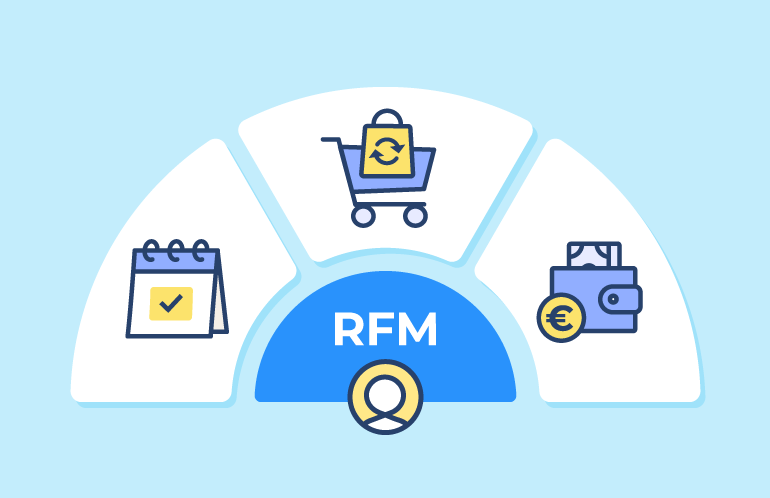
Thanks to RFM segmentation (Recency, Frequency, Monetary Value), Laura is identified as a high-value customer. Unlike an occasional customer who has made only a single purchase during a promotion, she maintains a regular relationship with the brand and contributes to its business over the long term.
Rather than sending her the same promotional offer as the rest of the customer base, the brand decides to offer her a more exclusive experience. A few weeks before the launch of a new skincare line, Laura receives a marketing email giving her early access to the collection. She gets to see the new products before they officially go on sale and receives an invitation to an event being held at her usual store.
A few days later, a push notification from the wallet app informs her that an exclusive gift is waiting for her on her next visit. No promotional codes, no massive discount offers—just a personalized gesture that recognizes her loyalty.
Over time, the brand continues to tailor its communications to reflect changes in customer behavior. A customer who has recently joined the top-tier customer segment will not necessarily receive the same benefits as Laura, who has been a loyal customer for several years.
| Required Modules | Features Used | Objectives |
|---|---|---|
| Customer Data Platform | RFM segmentation | Identify high-value customers and tailor marketing efforts to their level of engagement |
| Loyalty | VIP Status / Exclusive Benefits | Reward the most loyal customers without increasing general discounts |
| Marketing Automation | Personalized Email Marketing | Promote offers, new product launches, or invitations tailored to each segment |
| Mobile Wallets | Push wallet notification | Encourage VIP customers to take advantage of their benefits in-store |
ROILoyaltyCustomer ValueEngagement
For the customer, this approach creates a much stronger sense of appreciation than a standard promotion. The customer feels that the brand knows their habits, understands their preferences, and rewards their loyalty in a meaningful way. The benefits they receive become more exclusive, more memorable, and often more desirable than a simple discount.
For the cosmetics brand, the benefits are just as significant. By reserving certain perks for its most engaged customers, the brand maintains its profit margins while investing where the potential return is greatest. It also strengthens the loyalty of high-value customers, who often account for a significant portion of revenue.
This strategy helps increase customer lifetime value. A customer who feels valued is more likely to continue making purchases, try new product lines, and maintain a long-term relationship with the brand.
Beyond sales performance, this approach helps evolve the loyalty program toward a more relationship-based model. Rewards are no longer based solely on financial benefits; they become a way to foster closeness, appreciation, and engagement.
In the cosmetics industry, the best customers aren’t always looking for the lowest price. Above all, they’re looking for a brand that can offer them an experience worthy of their loyalty. Rewarding the best customers without giving discounts to everyone is ultimately a recognition that a lasting relationship is built more on perceived value than on constant promotions.
In the world of cosmetics, not all customers have the same expectations or the same attitude toward price. Some prefer entry-level products, while others are willing to spend more on products with more pleasant textures, more effective ingredients, or more sophisticated formulations.
However, most retailers still communicate in a one-size-fits-all manner with their entire customer base. A customer who regularly buys a €15 moisturizer will often receive the same messages as a customer who is already accustomed to premium skincare products.
What if CRM could help identify the right moment to suggest a relevant upgrade, without giving the impression that you’re always pushing the most expensive products?
Offering a customer a more premium product is never a simple task. Communication that is too pushy can be perceived as an attempt to sell at a higher price. Conversely, never exposing a customer to more advanced alternatives deprives the brand of an important growth driver.
The challenge is all the greater because cosmetics purchases are often driven by deeply ingrained consumer habits. A customer who is satisfied with their usual product is not naturally inclined to explore other options, even when those options might better meet their needs.
For retailers that carry multiple brands or product lines, the challenge is therefore to identify the customers most likely to be receptive to a premium offering, and then to design a discovery journey that is relevant enough to pique their interest.
Customer Data PlatformMarketing AutomationPredictive AIMobile Wallets
Let's move on to Laura, a loyal customer who regularly buys a mid-range moisturizer at her favorite beauty store.
As Laura makes purchases, the brand builds up its customer insights in its CDP. It knows that Laura regularly replenishes her products, reads content related to skincare, is curious about innovations in the industry, and is particularly interested in anti-aging products.
Rather than continuing to offer her only the products she is already familiar with, the most effective CRM strategy is to gradually introduce her to a more specialized line that addresses the same beauty concern.
A few days after her last purchase, Laura receives an editorial marketing email highlighting the brand’s innovations and the benefits of a new generation of skincare products enriched with dermatological active ingredients. The goal is not to make an immediate sale, but to spark her interest and introduce her to an even more effective alternative.
A few weeks later, the brand launched a campaign aimed at those seeking firmer, more radiant skin. It relied on predictive AI to target the audience most likely to make a purchase based on the product category featured in the newsletter. While the brand cannot be certain that Laura will be included in the target audience by the predictive engine, it’s a safe bet that she will be included in one of the campaign’s mailings, given her behavior and that of customers with similar characteristics. She will then be able to discover a premium serum whose benefits precisely match her expectations.
The brand can also enhance this strategy by including personalized product recommendations in its emails. A push notification can even alert customers that a promotional event or beauty consultation is being offered at the nearest store so they can try out this new line.
Moving upmarket is therefore no longer based on the product's price, but on how well it meets the customer's needs and expectations.
| Required Modules | Features Used | Objectives |
|---|---|---|
| Customer Data Platform | Unified Customer View and Behavioral Segmentation | Identify the customers most likely to be receptive to moving upmarket |
| Marketing Automation | Email marketing + product recommendations | Gradually introduce the customer to more specialized products tailored to her beauty concerns |
| Predictive AI | Predictive audiences | Target the customers most likely to be interested in the recommended products |
| Mobile Wallets | Wallet push notifications | Encourage customers to discover the premium line in-store through promotional activities, product assessments, or exclusive events |
Customer ValueCommitmentCredibilityLoyaltySales
For customers, this approach creates a much more natural experience than a simple promotional campaign. They discover new products just as they become relevant to them. The recommendations are perceived as personalized guidance rather than yet another sales pitch.
For the cosmetics retailer, the benefits are numerous. Moving upmarket obviously helps increase the average transaction value and customer lifetime value while reducing reliance on discounts. It also helps build customer engagement by introducing them to new product categories, new brands, or new beauty routines.
This strategy also helps build customer loyalty. When a brand supports its customers as their needs evolve—rather than relying on constant promotions—it strengthens its credibility and its role as an advisor.
In the cosmetics industry, upselling isn't about selling at a higher price at any cost. It's about offering the right product to the right customer at the right time.
In the cosmetics industry, customer relations have long relied on top-down channels. Brands send emails, newsletters, or text messages to promote their new products, special offers, or beauty tips.
But customer expectations are changing. Accustomed to the messaging apps they use every day to communicate with their loved ones, they are now looking for more direct, simpler, and more personalized interactions with brands.
So the question is no longer just about what message to send, but how to start a genuine, value-added conversation.
As in many areas of e Retail, communication efforts among beauty brands are intensifying. Emails, text messages, WhatsApp, RCS, wallet push notifications, app push notifications, and social media: touchpoints are multiplying, and customers are being reached more frequently than ever before.
In this context, it becomes harder to capture people’s attention. A newsletter may go unread for several days. A promotional email may get lost among dozens of other messages.
Nevertheless, consumer expectations have never been higher. They want advice, recommendations tailored to their needs, and quick answers to their questions.
The challenge, therefore, is to foster a closer connection without increasing marketing pressure and, by extension, to offer the same experience as in-store but in a digital format.
Customer Data PlatformMarketing Automation
Let's catch up with our loyal customer, Laura. For several months now, she has been regularly purchasing anti-aging products and frequently browsing skincare-related content on the brand's website.
To mark the launch of a new serum, the brand could simply send her the promotional marketing email it sends to its entire customer base. But this time, given Laura’s RFM and her product interest—as detected through the CDP’s aggregated data—a more personalized approach would be even more appropriate: using WhatsApp to initiate a more natural conversation. Laura then receives a message introducing the new product and inviting her to try it before anyone else: “Hello Laura, we’ve just launched a new serum designed to improve skin radiance and firmness. As a loyal customer, would you like to come try it before anyone else at the launch party?”
With just one click, she can continue the conversation by answering “yes” to the question asked.
Based on her responses, the brand can share the benefits of this new product with her, direct her to content tailored to her profile, or invite her to schedule an appointment at her usual store for a beauty consultation.
| Required Modules | Features Used | Objectives |
|---|---|---|
| Customer Data Platform | Unified Customer View, Aggregates, and Behavioral Segmentation | Identify the customers most likely to respond to a personalized invitation based on their purchases, interests, and level of engagement |
| Marketing Automation | Channel Orchestration + WhatsApp Campaigns | Initiate a personalized conversation at the right time and guide each customer to the most relevant content, product, or service |
Customer InsightCommitmentProximity
For Laura, the experience is simpler and more seamless. She interacts with the brand through an app she already uses every day. The messages are more context-specific, shorter, and often perceived as more useful than traditional marketing messages.
For the retailer, the benefits go far beyond campaign performance. Conversational channels help strengthen engagement, improve customer insight, and foster closer relationships throughout the customer lifecycle.
They also offer new opportunities to help customers discover products, schedule in-store appointments, or participate in exclusive events.
In a market where consumers expect ever-greater levels of personalization and responsiveness, conversation has become a key differentiator. In the cosmetics industry, the best relationships aren’t built solely on a good product. They also stem from a brand’s ability to listen, offer advice, and engage with its customers at the right moment.
The use cases presented in this article illustrate a profound evolution of CRM in the cosmetics industry.
Whether it’s anticipating a repeat purchase, creating a personalized beauty routine, rewarding top customers, encouraging customers to upgrade to higher-end products, or starting a conversation via WhatsApp, the goal remains the same: to offer more relevant interactions at every stage of the customer journey.
This transformation is made possible not only by better use of customer data, but also by brands' ability to intelligently coordinate their various communication channels.
In a market where consumers expect more personalization, advice, and recognition, CRM is no longer limited to executing marketing campaigns. It has become a powerful tool for gaining customer insights, fostering engagement, and creating value.
For players in the cosmetics industry, the challenge is therefore no longer simply to communicate more, but to communicate better: at the right time, through the right channel, and with the most relevant content for each customer. With the support of a customer intelligence agent, such as Ask my CRM Splio’s, powered by customer data and AI, CRM managers can now focus more on relationship strategy while technology helps them identify the best opportunities for engagement, loyalty, and value creation.
Table of Contents