What scenario should be put in place to increase the purchase frequency of inactive customers?
28
August

Alexandra Buzelin
Category: Email marketing
In this context, how can you engage your CRM base to make your brand stand out as the year comes to a close? We invite you to take a closer look at inactive buyers and create a segmentation based on purchase frequency, and reactivate them using a two-step strategy. Inactive buyers are high-potential customers who have already made at least one purchase through one of your sales channels but have exceeded the timeframe associated with your brand’s average purchase frequency—not to be confused with your inactive marketing list. Let’s get started!
First of all, you need to analyse your sales to identify a major trend: the average purchase frequency, i.e. the average time spent between two purchases per customer.
This average purchase frequency can vary from even to double depending on your sector of activity. If you sell furniture, it is unlikely that you buy every two months. On the other hand, if your sector of activity is similar to ready-to-wear, your purchase frequency may be much less frequent.
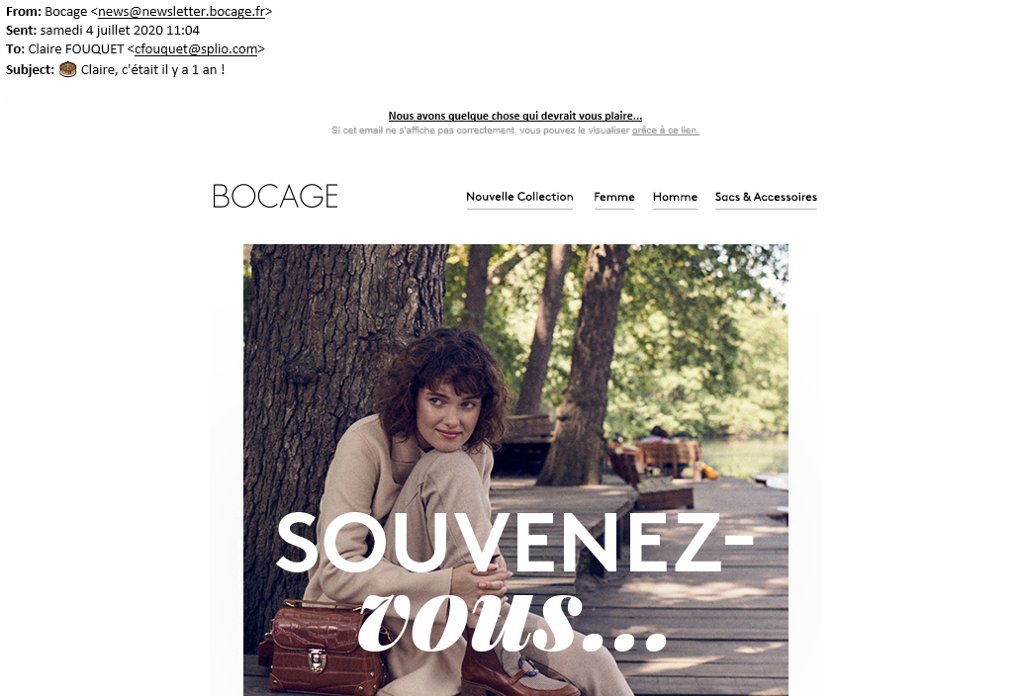
Now that you have detected all your inactive buyers, it is time to set up an automated scenario to get them back into your active buyer base. Ideally, you should offer them two personalised emails:
Obviously, if an inactive buyer opens one of these two emails and buys, they will automatically be reintegrated into your active customer base as they will meet the " purchased a product within the last X months " criteria.
But not everyone will buy the sequels to your script in two steps. What can you do to comply with the GDPR principles, avoid spamming your contacts and sending emails in the wind? Sort your buyer base, because a priori these very occasional buyers are no longer receptive to your products for the time being.
Your inactive customers are a golden base as you are talking to contacts who have already purchased a product from your brand and for one reason or another have not made a purchase since. It would be a shame to lose them by not setting up a scenario to remind them of their liking for your products. After all, it's common wisdom in loyalty that keeping a customer costs 5-10 times less than acquiring a new one.*** And if you run out of ideas for building loyalty, it's this way !
* Criteo study, August 2020.
** SNCD
*** Quality Performance